
If you have only cooked chole in the usual way, this Chikkad Chole recipe will surprise you. The juicy broth clings to each chickpea, the masala is ground fresh and the tadka of ghee at the end brings everything together in a fragrant and aromatic way.
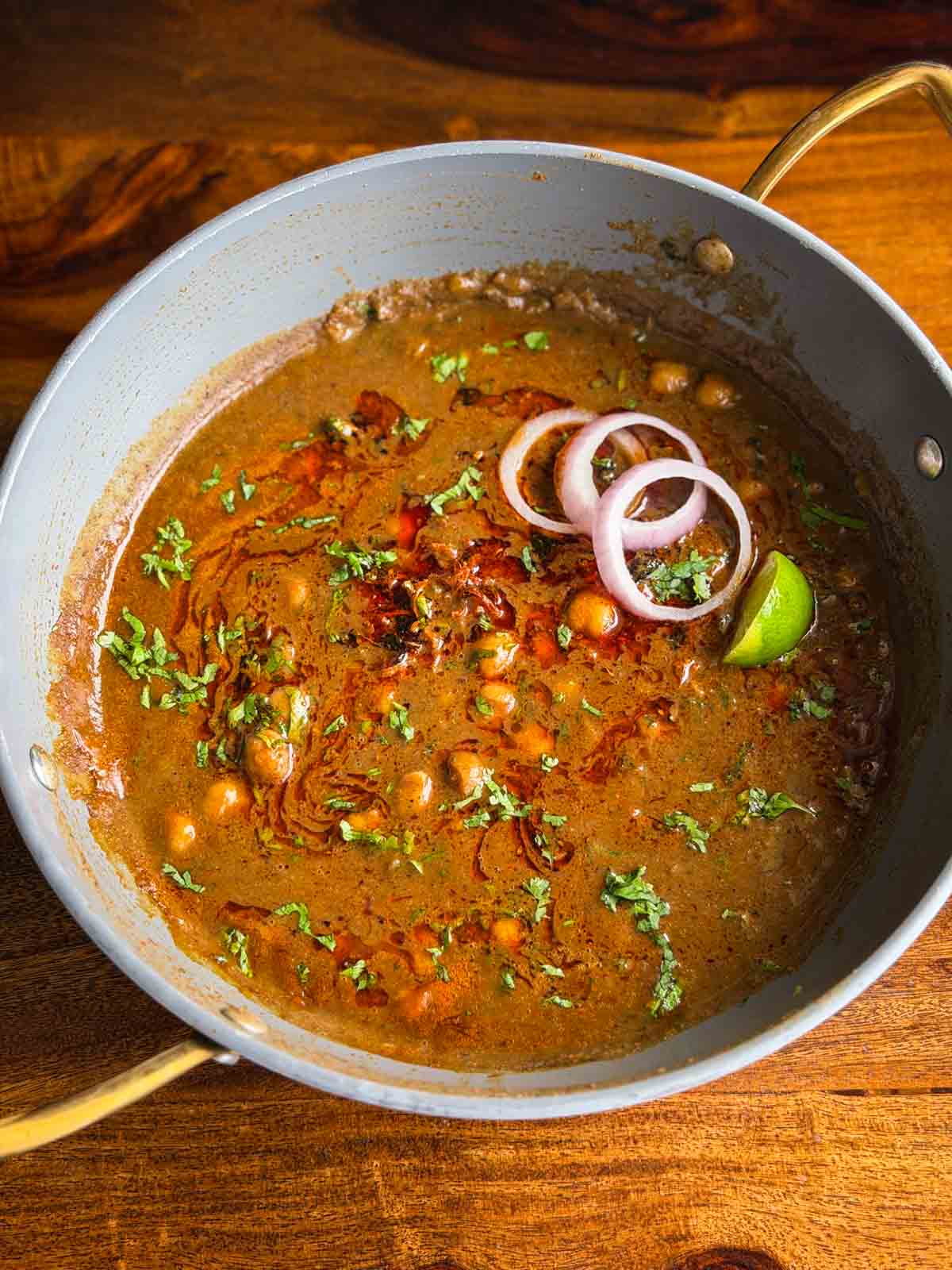
This Chikkad Chole recipe uses a mustard oil base, which makes it so different from all your usual chole recipes. Its uniqueness comes from mixing some of the cooked chickpeas, potatoes, cottage cheese and some other ingredients, making the base super creamy, delicious and flavorful.
What I also really like is that it comes together in about 30 minutes, which seems like a steal deal for how good it tastes. You cook the chickpeas in a pressure cooker with whole spices, grind your masala and the rest is just letting it all simmer together. If you like hearty, gravy recipes, this chole chikkad has that same homely comfort.
jump to the section: Chikkad chole
Ingredients for Chikkad Chole
- chickpeas: Dry chickpeas are soaked overnight. They hold their shape better than preserves and absorb the masala well.
- Potatoes: A small peeled potato cooked with chickpeas and mixed in masala. This is what gives the gravy its thickness.
- Whole spices: Bay leaves, cinnamon stick, black cardamom and cloves. These are put into the pressure cooker with the chickpeas and discarded after boiling.
- Grinding paste: Green chillies, ginger, garlic, shaken curd and ground coriander stalks along with some boiled chickpeas and potatoes.
- Mustard oil: It gives the cough its special aroma. You can use any neutral oil instead, but mustard oil makes a real difference.
- Onions and spice powders: Finely chopped onions, coriander powder, kashmiri chili powder, cumin powder, turmeric, chole masala and amchur.
- Tempering: Caraway seed ghee, asafoetida, methi kasuri, grated ginger and cashmere chili powder. Pour over the finished cole slaw and garnish with fresh coriander leaves.
Frequently asked questions
The main difference is the sauce. Regular curry usually has a thinner and runnier gravy, while chole chikkad has a thick and rich gravy. The texture comes from mixing some of the chickpeas and potatoes cooked into the masala, rather than adding cream or cashews. The freshly ground paste of curd, ginger, garlic and coriander stalks also gives it a more layered flavor compared to the usual kohl made with only dry spice powder.
You can, but the result will not be the same. Canned chickpeas are already cooked, so they won’t absorb the masala as deeply as dry ones that have been pressure-cooked with full spices. If you use canned, drain and rinse them, skip the pressure cooking step and cook them in the broth a little longer so they take on some flavor. You will still need to cook a small potato separately to mix into the masala for the thick gravy.
Yes, you can cook chickpeas in a heavy bottomed pot with a lid. Cover with enough water along with all the spices and potatoes, bring to a boil, then simmer on low heat for about 45 minutes to an hour until the chickpeas are completely tender. It takes more than a pressure cooker, but the result is the same. Just be sure to check the water level from time to time and top up if necessary so the chickpeas don’t dry out.
Richa’s top tips
- Soaking chickpeas at night is important because it helps them cook evenly and soften all the way through. Lightly soaked chickpeas will last longer in the pressure cooker and may end up with a bite to them.
- Let the pressure cooker release the pressure on its own instead of forcing the lid open. This allows the chickpeas to continue cooking in the residual heat. Which gives you softer and creamier chickpeas that absorb the masala better.
- Cooking the ground paste with the spice powders on low heat until the oil separates is what builds the depth of flavor in chole curry. This requires patience, but the resulting taste is worth the effort. If the mixture starts to dry, add a tablespoon of water instead of pouring it all in at once.
- Using mustard oil instead of a neutral oil it makes a noticeable difference in taste. If you’re not used to mustard oil, heat it until it starts to smoke before adding anything, which takes the raw edge off.
Storage tips
- Refrigerator: Store leftover chikkad chole in an airtight container in the refrigerator for up to 3-4 days. The gravy thickens further as it cools, so add a splash of water when reheating to loosen it. Honestly, it tastes even better the next day.
- Freezing: You can freeze chickpea curry without tadka for up to a month. Thaw overnight in the refrigerator. Reheat on the stove, then make a fresh tadka and pour over before serving. This way the tadka remains aromatic and does not lose its punch.
Ideas for service
Chikkad chole has a thick and rich gravy that pairs well with bread, rice and even some sides to complete the meal.
- With bread: The classic pairing is with bhature. But this chole also goes very well with a warm lacha paratha or a kulcha stuffed with garlic cheese. Thick liquid sticks nicely to any of these.
- With rice: A simple one jeera rice or plain steamed basmati lets the chole do the talking. You can also try it over a bowl of fluffy white rice with a dollop of ghee on top.
- With a side salad: Thinly sliced onions, a slice of lemon, some green chili is the perfect way to cut the richness. A kachumber salad with cucumber, tomato and onion works just as well.
- For a conversational turn: Spoon chikkad chole on a plate chat bread. You can also use it as a topping on crispy papdi for a fusion style snack.
Did you know?
The word “chikkad” comes from Hindi and loosely translates to thick, sticky or muddy, which is exactly what this tree’s sap looks like when done right. Unlike regular chole where the gravy is runnier and the chickpeas sit in it, chikkad chole is all about the masala coating every single chickpea so there is hardly any loose gravy left in the bowl. This style of chickpea curry is popular in North India, especially in Punjab and Delhi, where roadside vendors cook it slowly for hours in large pots until the liquid reduces and thickens naturally. The homemade version uses mixed chickpeas and potatoes to get the same thick consistency in a fraction of the time.
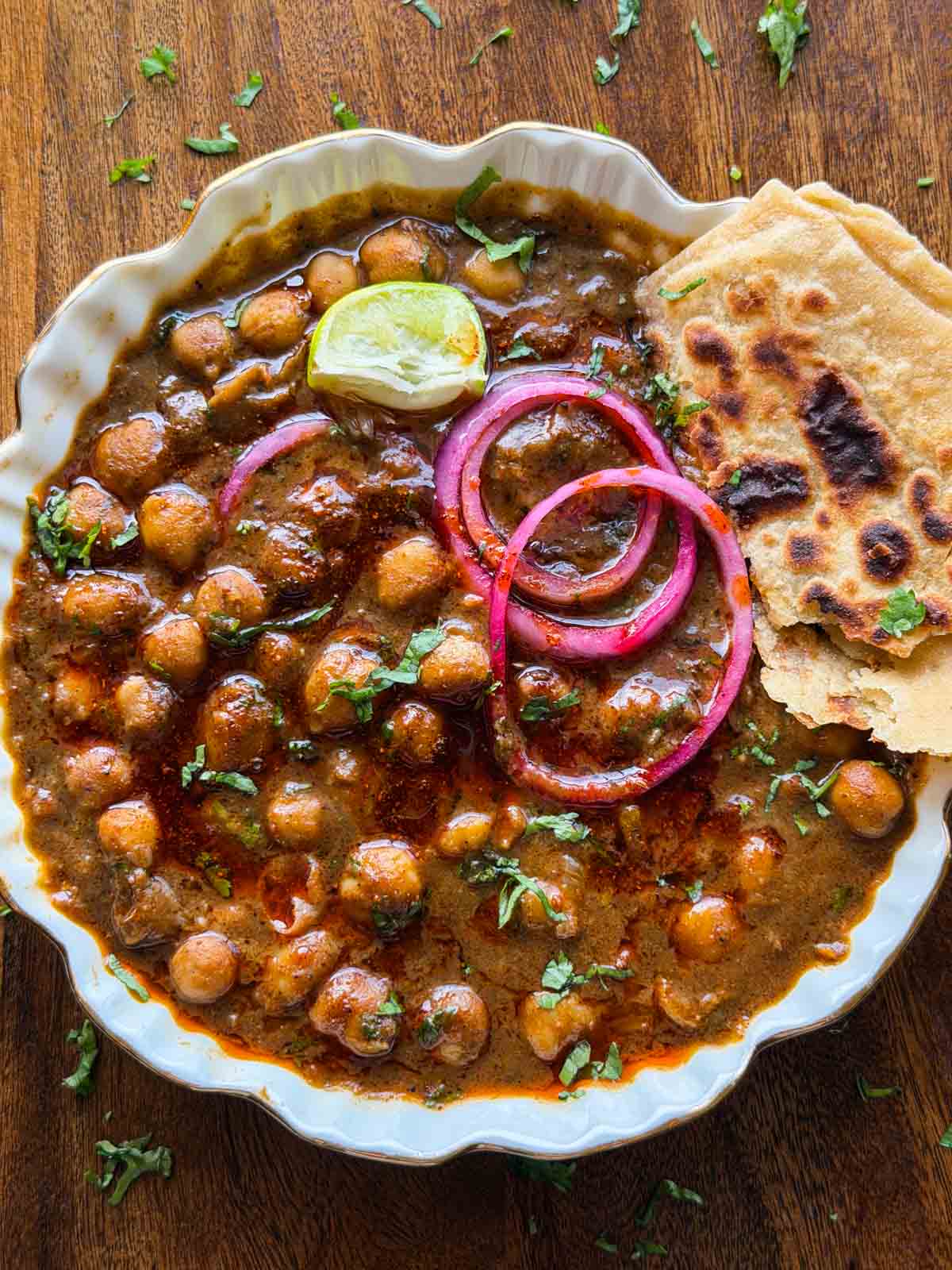
If you have been making chole the same way every time, this chikkad chole recipe is a really good reason to change things up. The thick, flavorful gravy, the freshly ground masala and that final tadka of ghee make it feel like a completely different dish. Plus, it all comes together in about 30 minutes.
Try it with bhature, kulcha or just plain rice and see how quickly it becomes a regular in your kitchen. If you make it, tag me on Instagram @my_foodstory so i can see your version!
Watch Chikkad Chole Recipe Video
Prevent your screen from going dark
Cooking peas
-
Heat a pressure cooker, add soaked peas, potatoes, bay leaves, cinnamon sticks, black cardamom, cloves, 2 cups of water, close the lid and cook on high pressure. After the first whistle, simmer on low for 20 minutes until the peas are well cooked. Let it take the pressure off itself. Uncover, discard all spices, set aside cooked potatoes and ½ cup of cooked peas.
Chikkad chole gravy
-
Heat mustard oil in a kadai, add cumin seeds, hing and once they crackle, add the ground paste along with all the spice powders, mix well and cook covered on low for 3-4 minutes until the oil separates from the masala. You can add 2-3 tablespoons of water, 1 tablespoon at a time, if the mixture becomes too dry during cooking.
-
Add the cooked chickpeas along with the boiled water, ½ cup of water and simmer on low for 10 minutes until the chickpeas absorb the masalas.
Tempering
-
Heat ghee in another pan or kadai, add carom seeds, hing, kasuri methi, ginger and fry for 4-5 seconds. Take off the heat, add kashmiri powder, mix well and pour the seasoning over the boiled stock and mix well. Garnish with coriander leaves and serve.
- Mustard oil gives an authentic taste to the broth, which can be replaced with any neutral-flavored cooking oil.
Calories: 281kcal, Carbohydrates: 32g, Protein: 7g, Fat: 15g, Saturated fat: 3g, Polyunsaturated fat: 3g, Monounsaturated fats: 8g, Cholesterol: 6mg, Sodium: 666mg, Potassium: 541mg, Fiber: 7g, Sugar: 5g, Vitamin A: 679was, Vitamin C: 19mg, Calcium: 90mg, Iron: 4mg
This article was researched and written by Harita Odedra.