
Making sabudana khichdi is easy but may take some practice. But with my six tips for making non-sticky Sabudana Khichdi, you’ll be a pro in no time!
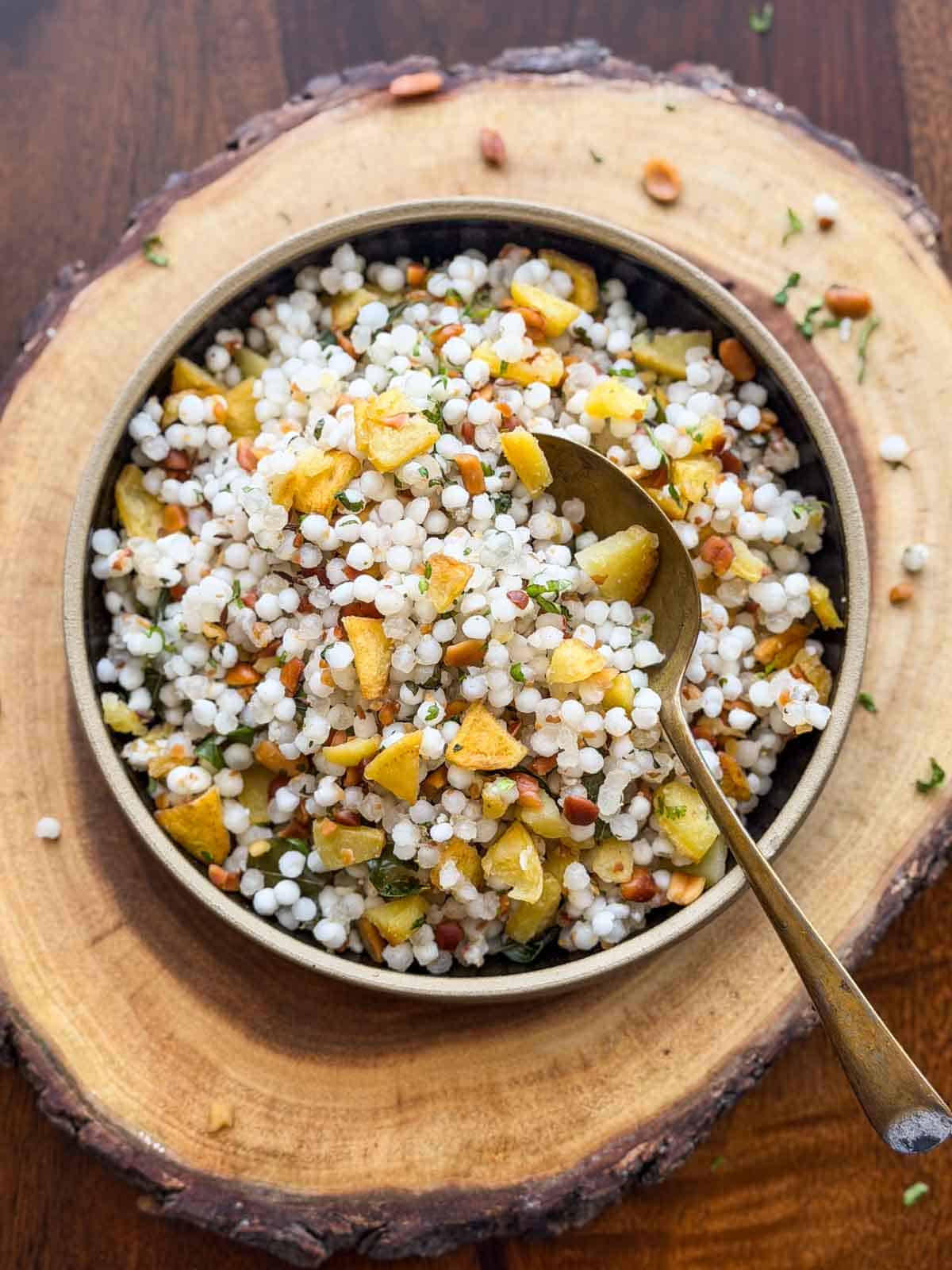
Sabudana Khichdi makes a weekly appearance on our breakfast table and we make it almost every day during Navratri. We love the flavor and texture that the aloo, sabudana, and peanuts add to the dish, and how it all feels complete and so delicious with the final touch of lemon juice.
But many people complain that their sabudana khichdi turns out messy or thick. And while this may be a common problem, it’s actually quite easy to fix. In this article, along with the recipe, I am sharing 7 foolproof ways to make the most perfect sabudana khichdi ever. No more lumpy, runny, uneven tasting sabudanas ever!
Go to section: sabudana khichdi
What is Sabudana Khichdi
Sabudana Khichdi is really like a pilaf or pulao made with sago pearls. Its simplicity is what sets it apart. But if not done right, it can turn into a disaster with sticky, lumpy sabudana that’s overcooked. We are looking for a dish where each sago pearl is unique, perfectly cooked and just turned translucent.
Sabudana Khichdi Summary of Ingredients
Sabudana: They are also known as sago pearls. It is the hero ingredient. These come in three different sizes, but I think medium ones works best for this recipe
Ghee: For taste and richness. I love using mine home made ghee for best results.
seasoning: Cumin seeds or jeera, and curry leaves. It uses minimal spices because people traditionally eat it on fasting days
potato: For quality and taste
Peanuts: It adds some good fats, texture and a nice nutty flavor to every bite
seasoning: Salt and sugar are added to spice up the dish
Lime juice and chopped coriander: Used as a garnish for a refreshing kick. These are the perfect endings
7 real tips for the perfect Sabudana Khichdi
- wash: Sabudana should be washed well to get rid of excess starch under running water in a colander. Gently rub the pearls between your fingers for even better results.
- Suck: Follow a 1:1 ratio of sabudana to water. So for one cup of sabudana you need one cup of water. The water should just cover the sabudana.
- Boil for at least 5 hours: I’ve seen recipes where sabudana soaks for 2-4 hours, but after much trial and error, 5 hours minimum or overnight (roughly 8 hours), if I have the time, gives me the best results. .
- Use crushed peanuts: This keeps the khichdi dry while adding flavor, fats and proteins
- Make sabudana in ghee: The richness of ghee and the nice flavor it adds are something else. However, you can make it vegan by using oil instead. But if you can, please make this in ghee for the best taste!
- Do not mix too much: After adding the soaked sabudana to the pan, stir well until everything is mixed and then let it simmer on high flame for a few minutes. Mixing it constantly causes the sago pearls to clump together
- Don’t overdo it something: Cook only for about 2-3 minutes on low flame until you see the sabudana become slightly translucent. If sabudana is overcooked, it will start to stick together
Ideas for service
- With yogurt: Serve sabudana khichdi hot with a bowl of cold yogurt or dahi on the side. It balances the heat from the green peppers and makes the meal more delicious.
- With a side of crispy: Combine with roasted peanuts, French fries or banana chips for a light, fasting-friendly crunch in every bite.
- With a cup of tea: Sabudana khichdi makes a delicious breakfast or evening snack with a hot cuppa masala chai.
Storage tips
- freezer: Allow the sabudana khichdi to cool slightly, then transfer to an airtight container and refrigerate within 2 hours of cooking. It will keep well for up to 2 days.
- Reheat: Sabudana tends to get a bit sticky as it cools. Pour a teaspoon or two of water over the khichdi and heat in a covered pan over low heat, stirring gently until heated through. You can also microwave it in short bursts, stirring in between.
- Texture restoration: If the khichdi seems dry after cooling, add a small splash of water while reheating. A squeeze of lemon juice and some fresh cilantro added just before serving can also freshen it up.
- freeze: I would not recommend freezing sabudana khichdi, as the tapioca pearls can become mushy or change in texture after thawing.
- Advice to do ahead: You can soak and drain the sabudana ahead of time and refrigerate it until you are ready to cook it. Keep covered and use within a day for best results.
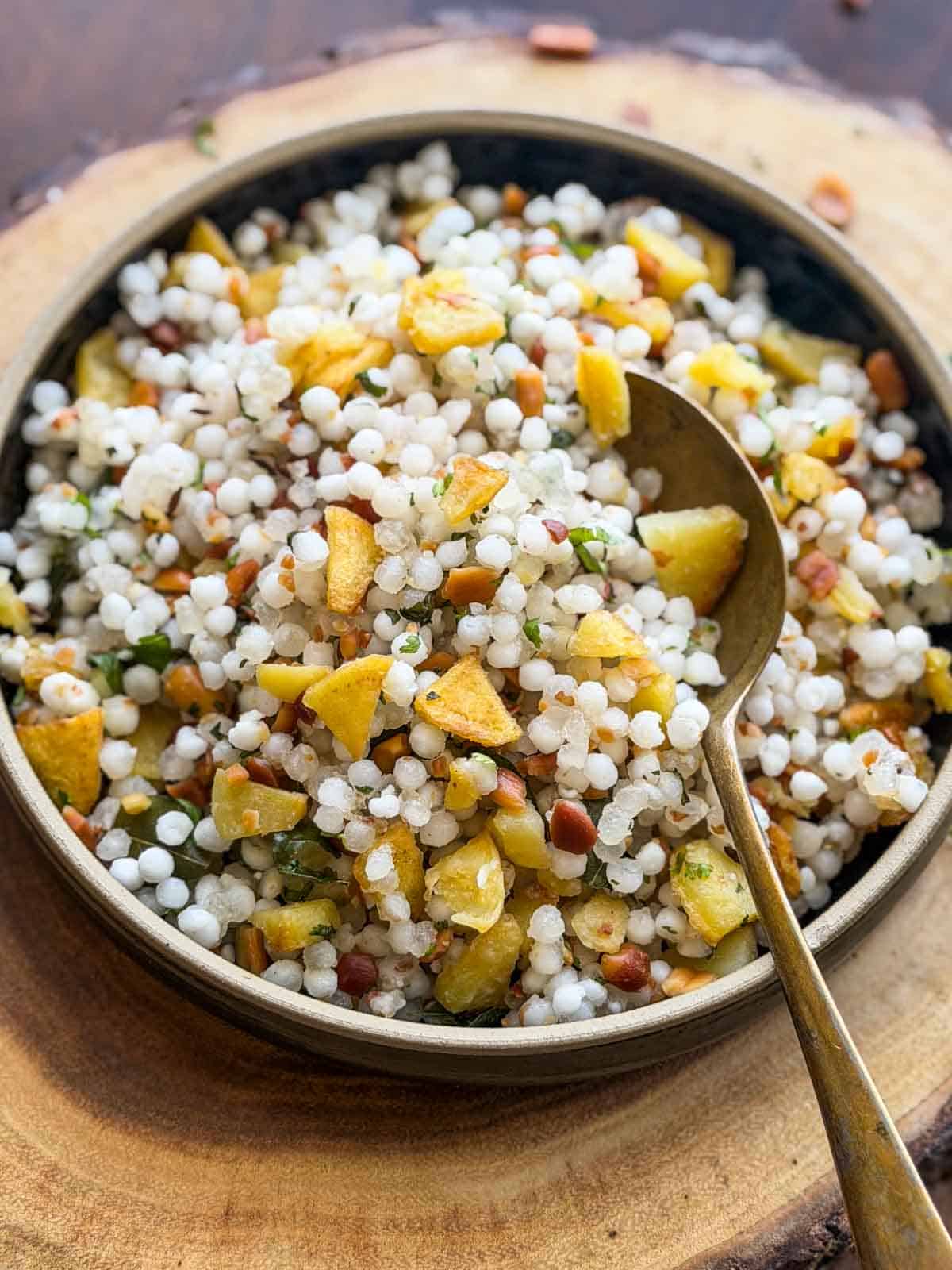
Sabudana Khichdi is a delicious meal in itself. Some serve it with curd or yogurt but I prefer it as it is. This khichdi is gluten free and can be made vegan by substituting ghee for oil.
Watch Sabudana Khichdi Recipe Video
Prevent your screen from going dark
-
Wash 1 cup of sabudana well in running water to remove excess starch and soak in 1 cup of water overnight or for 8 hours.
-
To check if the sabudana is soaked enough, press a pearl between your fingers and it should break easily. Drain the sabudana after soaking to get rid of excess water and keep aside. This is an optional step – I’ve never had to do this.
-
Heat ghee in a pan and add cumin seeds or jeera. Once they start to splutter, add the mashed potatoes and 1/4 teaspoon salt. Fry the potatoes and cook on low heat for 3-4 minutes until soft.
-
Add the curry leaves and green chillies and fry for another minute.
-
Add soaked sabudana, crushed peanuts, remaining salt and sugar and mix well. Cook for a few minutes – about 3-4 minutes on low heat until the sabudana starts to turn translucent.
-
Turn off the heat, add the lemon juice and chopped coriander and give it a quick mix. Serve hot.
- wash Sabudana well to get rid of any excess starch under running water in a colander
- breathe that in a 1:1 ratio of Sabudana to water. So for one cup of sabudana you need one cup of water. The water should just cover the sabudana.
- Soak at night for better results. I’ve seen recipes where sabudana soaks for 2-4 hours, but after much trial and error, overnight gives me the best results. About 8 hours is good.
- Use it crushed peanuts which help reduce the stickiness of the sabudana khichdi and also add flavor, fats and proteins
- Don’t overdo it after adding the sabudana to the pan. After you have added the soaked sabudana, mix well until everything is mixed and then let it simmer on high heat for a few minutes. Mixing it constantly causes the sago pearls to clump together
- Don’t overdo it something. We only cook it for a few minutes on a low flame after stirring the sabudana until they start to become translucent. If sabudana is overcooked, it will start to stick together
Calories: 474kcal, Carbohydrates: 75g, Protein: 6g, Fat: 17g, Saturated fat: 6g, Polyunsaturated fat: 3g, Monounsaturated fats: 6g, Cholesterol: 19mg, Sodium: 1064mg, Potassium: 380mg, Fiber: 9g, Sugar: 2g, Vitamin A: 118was, Vitamin C: 57mg, Calcium: 48mg, Iron: 2mg
This article was researched and written by Urvi Dalal.