
One of my favorite things to make, especially on a busy weeknight, is delicious fried noodles. While fresh udon noodles are my go-to when making quick comfort food, they are sometimes not as readily available as the dry or frozen noodles you would get from your local grocery store that can be found in the Asian aisle.
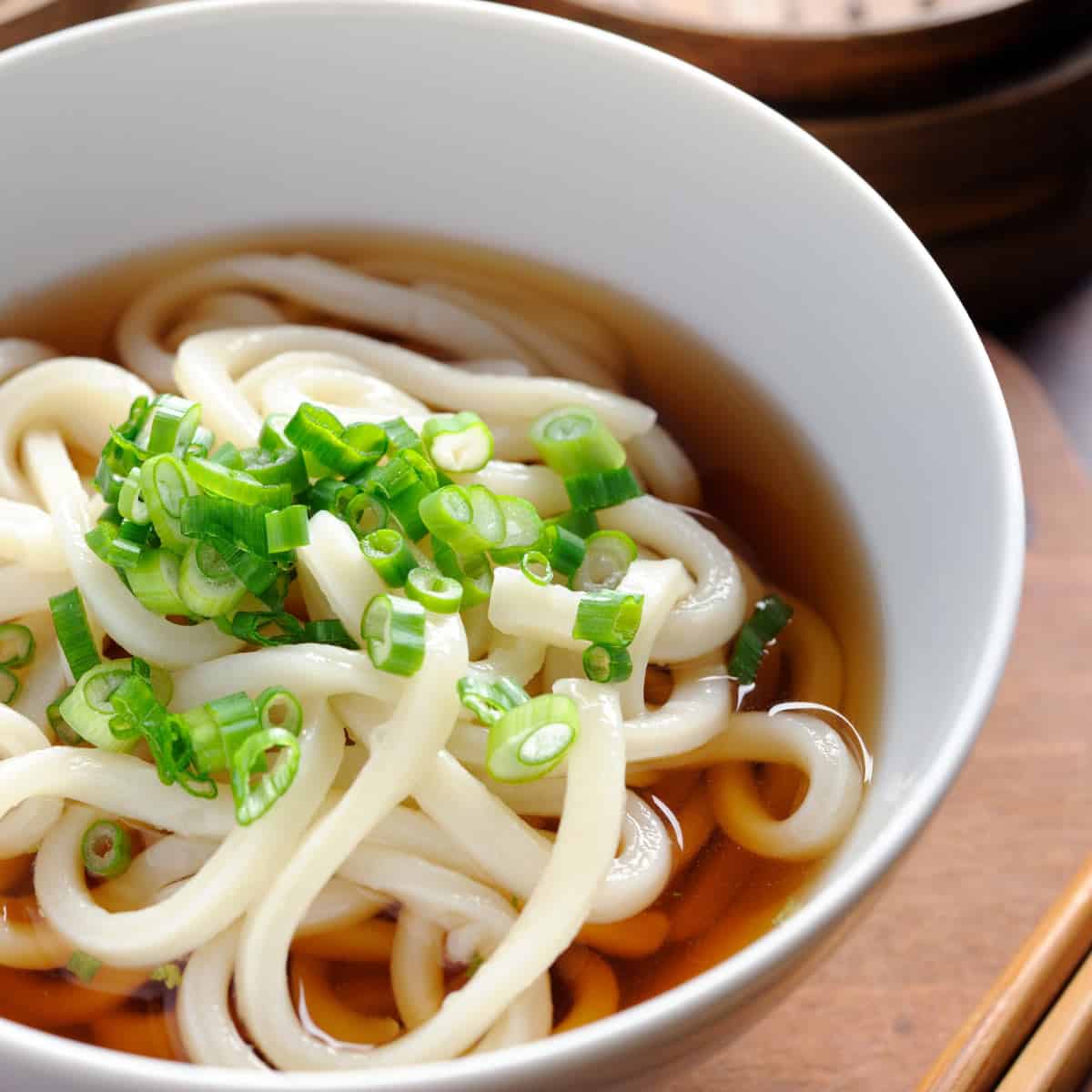
There is nothing more comforting than heating fresh udon noodles in hot water and adding some meat, vegetables, sauces and spices.
Jump to:
History of Udon Noodles
Udon noodles are thick wheat noodles that are integral to Japanese cuisine and are known for their distinct chewy texture. Their origin is a subject of historical debate.
While some theories indicate that udon noodles originated in China, perhaps evolving from a pasta-like form, other sources attribute their beginning to Japan. A third point of view links their roots to Korea, where they are known as Garak-Guksu.
Varieties of Udon Noodles
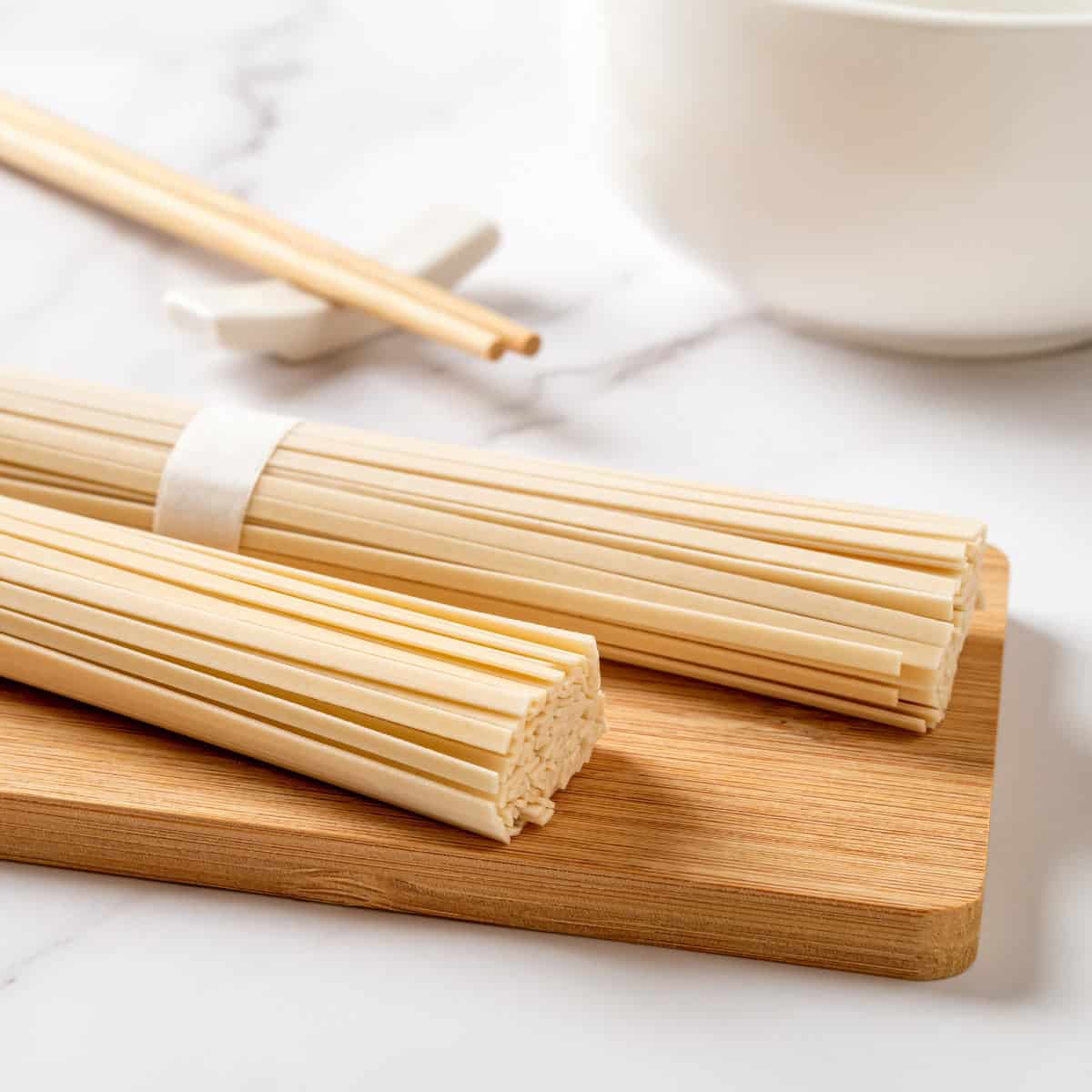
- Dried or Fresh Udon Noodles: Udon comes mainly in two forms – dry and fresh. Dried udon noodles, similar to fettuccine but thicker, are known for their thicker texture when cooked. On the other hand, fresh udon noodles are rounder and thicker, offering a different mouthfeel and chewiness.
- Regional Variations: In Japan, different regions have a unique take on udon, leading to a rich diversity within this noodle type.
- Special Udon: Whole wheat udon, a healthier variant, is less common but can be found in natural foods. Its texture and flavor profile are somewhat closer to soba noodles made from buckwheat flour.
- Yaki Udon: A popular fried version of udon, jaki udon is a delightful dish cooked with vegetables, proteins and tasty sauces, showing the versatility of udon beyond soups and salads. Yaki udon is similar to Pancit Canton (a Filipino noodle dish).
- Frozen and Precooked Udon: These varieties are also available, offering convenience and a different texture profile, often chewier than dried udu.
Nutritional Profile
Udon noodles offer a balanced combination of carbohydrates, protein and essential nutrients with a low fat profile, making them a healthy choice for a variety of meals. However, due to their high carbohydrate content, portion control may be necessary for individuals with specific dietary needs or health conditions.
Calorie Content and Macronutrients
- Per 100 grams, dried udon noodles contain approximately 104 calories. They have minimal fat content with total fat at 0g, which includes no saturated or trans fats. This makes them a low-fat choice for those watching their fat intake.
- Udon noodles have 22 grams of carbohydrates per 100 grams, making them a great source of carbohydrates. This high content of carbohydrates is mainly due to the wheat flour used in their production. They also contain a modest amount of dietary fiber (1g) and protein (3g).
Vitamins and Minerals
- Udon noodles aren’t just about carbs; they contain important nutrients such as iron, potassium, thiamine, niacin, riboflavin, phosphorus, zinc, copper, folate and magnesium. These nutrients contribute to a variety of health benefits, including energy production, bone health and immune function. The nutritional content can vary depending on the quality of wheat used to make the noodles. Higher quality wheat can result in a more nutrient-dense noodle.
Low Sugar and Sodium Content
Udon in Recipes
Udon’s mild flavor and filling nature make it a versatile ingredient. It is often used in Japanese dishes such as tempura udon, hot soups and stir-fries. Yaki-udon, for example, is a popular stir-fried dish in which udon is cooked with vegetables, proteins, and a delicious sauce.
Dried Udon Cooking
- Choose Your Udo: Start by choosing high-quality dried udon noodles from Asian grocery stores or the international section of large grocery stores.
- Prepare the Water: Bring a large pot of water to a boil. A general rule of thumb is to use about 1 quart of water for every 4 ounces of udon noodles. This abundant water helps the noodles cook evenly without sticking.
- Cook the Noodles: Add the dried udon noodles to the boiling water. The cooking time for dried udon is usually around 8-10 minutes, but it’s always good to check the package for specific instructions. Stir the noodles from time to time to prevent them from sticking together. For an extra precaution against sticking, you can add a little vegetable oil to the water.
- Test the texture: To check if the noodles are cooked to the right texture, take one noodle out of the pot and taste it. Udon should be soft but still offer a slightly chewy texture. Be careful not to overcook them; they can lose their clear chewiness and become hard.
- Drain and Rinse: Once cooked, drain the udon noodles in a colander or strainer. Immediately rinse them under cold running water to stop the cooking process and wash away excess starch. This step is crucial to maintain the desired chewy texture of the noodles and prevent them from becoming gummy or sticky.
- Serve as Desired: Udon noodles are incredibly versatile. They can be served hot in a broth, usually with a simple broth made from dashi, soy sauce or miso, and topped with green onions, shiitake mushrooms and bonito flakes. For a better meal, you could add chicken, shrimp or tofu. Udon noodles are also great in stir-fried dishes, combined with vegetables, sesame oil and a salty sauce. Alternatively, they can be chilled and served in cold salads or with a dipping sauce.
Frequently Asked Questions
Yes, dried udon can be used for stir-fries, but be careful not to overcook them as they are thinner and softer than fresh or frozen udon.
Homemade udon noodles can be frozen for up to 1 month. Pre-cooked noodles last about 5 days in the fridge.
Udon noodles are thicker and chewier compared to the thinner ramen (made with egg) and soba (made with buckwheat flour).
Store them in an airtight container in a cool, dry place.
Yes, you can freeze them for up to a month.
Reheat briefly in boiling water or add directly to hot soup or stir-fry.
No, they are made from wheat flour and contain gluten.
Yes, they can often replace other thick noodles in recipes.
If stored properly, they can last several months to a year.
Conclusion
Cooking dried udon noodles is a delightful journey into the heart of Japanese cuisine. Known for their chewy texture and mild flavor, these thick wheat noodles are not only a staple in Japanese dishes but also a canvas for a wide array of flavors and ingredients. Whether boiled in hot broth, stir-fried with a mix of vegetables and proteins, or tossed into refreshing cold salads, udon noodles offer versatility and satisfaction in every bite. Remember to follow the simple steps to achieve that perfect chew. With their rich history, diverse varieties and nutritional profile, dried udon noodles are more than just food; they are an experience inviting you to explore and taste the essence of Japanese cooking.
Looking for other rice and noodle recipes? Try these:
Other Filipino Recipes
These are some of my favorite Filipino recipes that I think you should try.
How to Cook Dried Udon Noodles (Easy Cooking Tips)
With our expert guidance, you will easily master the art of preparing dried udon noodles for your favorite dishes.

Instructions
-
Choose Your Udo: Start by choosing high-quality dried udon noodles from Asian grocery stores or the international section of large grocery stores.
-
Prepare the Water: Bring a large pot of water to a boil. A general rule of thumb is to use about 1 quart of water for every 4 ounces of udon noodles. This abundant water helps the noodles cook evenly without sticking.
-
Cook the Noodles: Add the dried udon noodles to the boiling water. The cooking time for dried udon is usually around 8-10 minutes, but it’s always good to check the package for specific instructions. Stir the noodles from time to time to prevent them from sticking together. For an extra precaution against sticking, you can add a little vegetable oil to the water.
-
Test the texture: To check if the noodles are cooked to the right texture, take one noodle out of the pot and taste it. Udon should be soft but still offer a slightly chewy texture. Be careful not to overcook them; they can lose their clear chewiness and become hard.
-
Drain and Rinse: Once cooked, drain the udon noodles in a colander or strainer. Immediately rinse them under cold running water to stop the cooking process and wash away excess starch. This step is crucial to maintain the desired chewy texture of the noodles and prevent them from becoming gummy or sticky.
-
Serve as Desired: Udon noodles are incredibly versatile. They can be served hot in a broth, usually with a simple broth made from dashi, soy sauce or miso, and topped with green onions, shiitake mushrooms and bonito flakes. You could add chicken, shrimp or tofu for a better meal. Udon noodles are also great in stir-fried dishes, with vegetables, sesame oil, and salty sauce. Alternatively, they can be chilled and served in cold salads or with a dipping sauce.
Please share @JOZmahal on social. Thank you!