
A fresh, nutritious and oh-so-easy breakfast – Instant Ragi Dosa is best enjoyed with coconut chutney and podi. One of my favorite millet recipes and a really easy way to incorporate them into your diet.
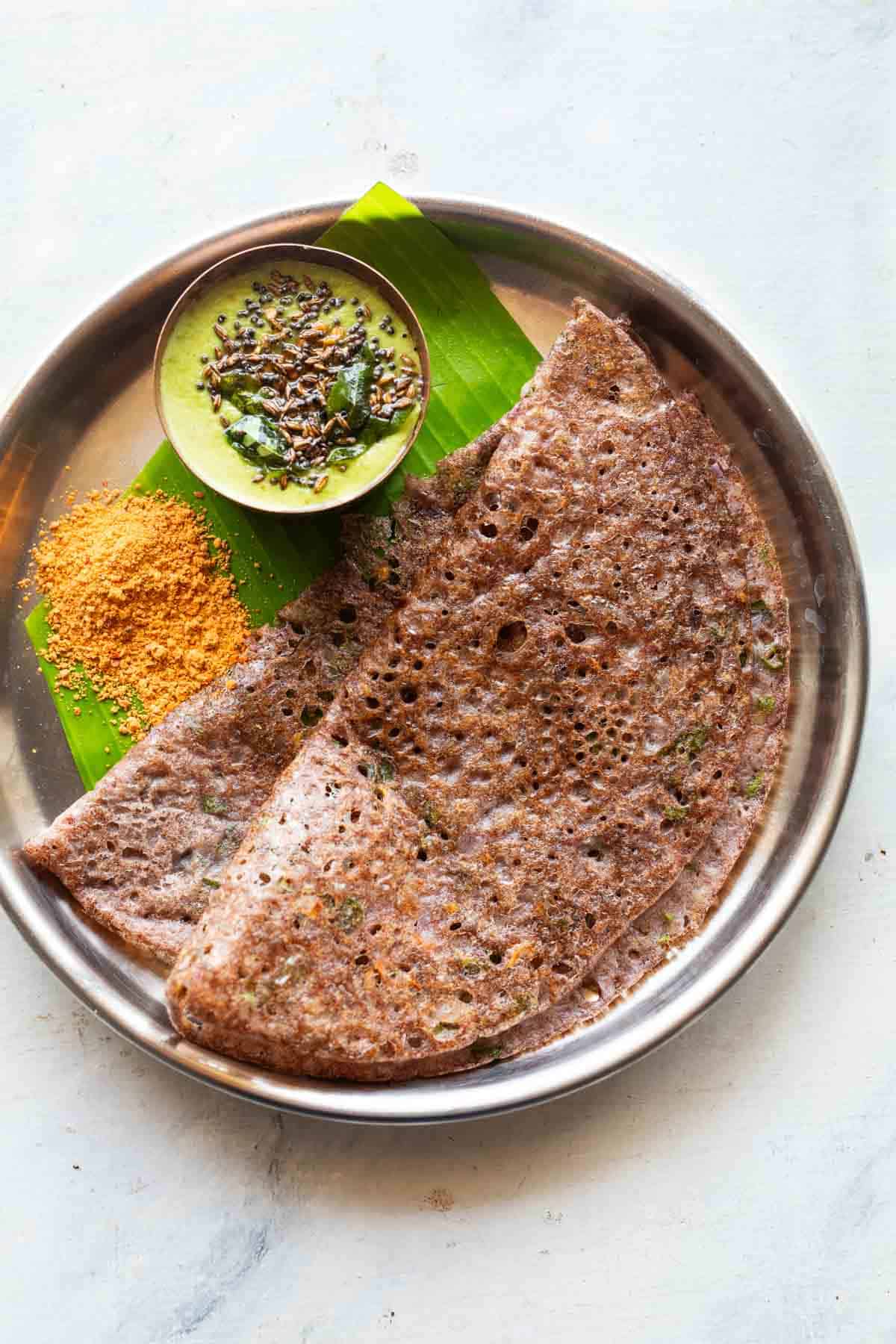
We’ve talked about how I’m trying to incorporate more millet into my diet and this is my favorite recipe. Actually, now that I think about it, Ragi or Finger Millet is my most used millet. Because it’s so easy to incorporate – I use it to do it ragi crepes, pancake, cake and even ragi soup.
And today I have for you this delicious Instant Ragi Dosa – a super healthy and hearty breakfast that takes minutes to prepare. Dosa is our favorite breakfast in my days and we make many different types – regular dose, oatmeal, dose of banana, dosa millet with a fermented dough, down the sow, dose of banana AND chilly. This Ragi Dosa is a current favorite because it is more filling than the usual dosa, requires no fermentation and is a great way to include ragi in the diet.
skip to section: instant ragi dosa
If you want to learn more about millet, including the types, how to cook them, ideas for incorporating them into your diet and much more, be sure to check out Millet 101 article.
Ingredients for Ragi Dosa
Here is a quick snapshot of all the ingredients you need for ragi dosa. Ragi Flour or Finger Millet Flour is easily available in most places these days.
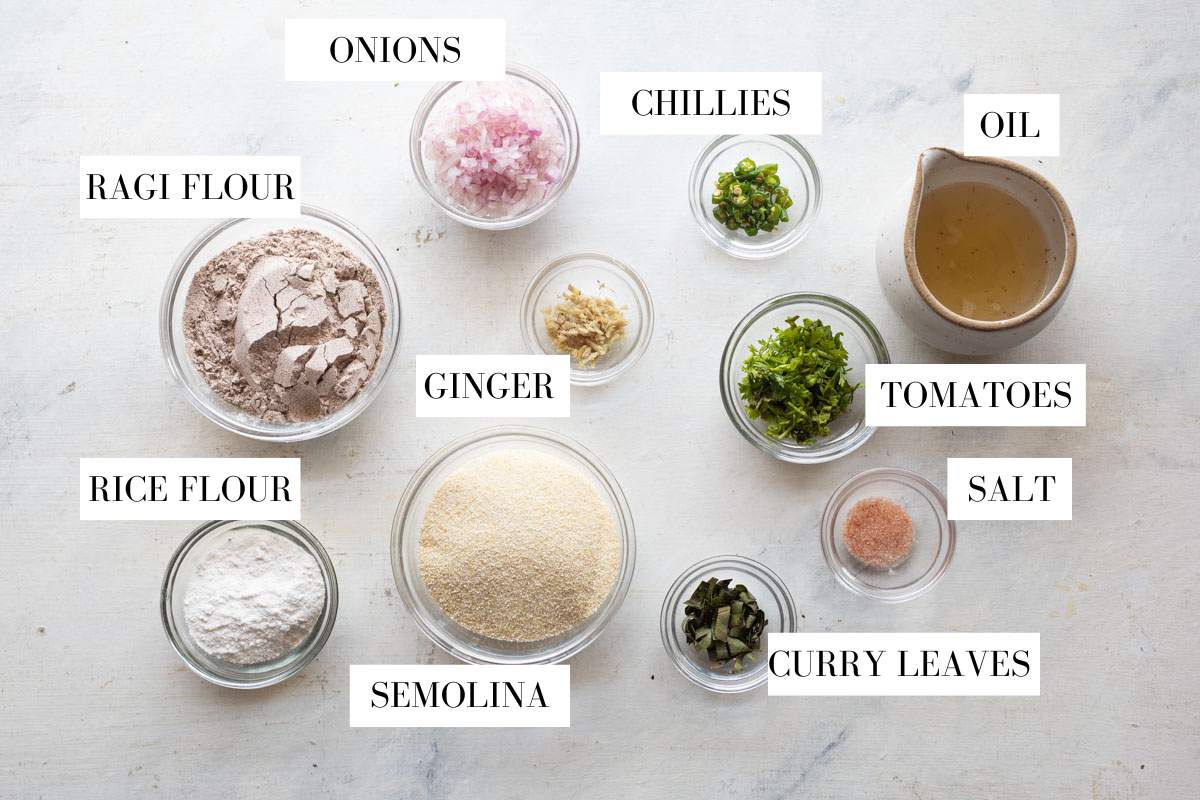
Ragi flour: Aka finger millet flour. It is easily available in most of the stores both online and offline in India. If you are outside India, you should be able to find it in any Indian supermarket near you
oatmeal: Rava or semolina helps to achieve that lacy and crunchy texture of the dosa. It also gives the dosa batter more body and prevents the dosa from falling apart
Rice flour: It helps the batter to be light and airy and the dosa to be crispy
Onions: For texture and taste in permanent bites
Greens: Chopped coriander leaves and curry leaves add a nice earthy flavor and freshness
Ginger: Finely ground for taste and aroma
Green chillies: Finely chopped for a heatstroke
Salt: For spices
Oil: Any neutral flavored oil helps prevent the dosa from sticking and makes it crispy. You can also use butter or ghee instead
Benefits of finger millet
- Rich in calcium: Finger millet, also known as ragi, is naturally high in calcium, which supports strong bones and teeth.
- Good source of fiber: Its fiber content can help support digestion and keep you feeling fuller for longer.
- Naturally gluten-free: Ragi is a great grain option for people looking to include more gluten-free foods in their diet.
- Provides plant-based iron: It contains iron, which plays an important role in supporting the healthy production of red blood cells.
- Contains essential nutrients: Ragi provides nutrients like magnesium, phosphorus and potassium, making it a healthy addition to everyday meals.
- Sustainable energy source: Its combination of complex carbohydrates and fiber makes it a nutritious choice for breakfast, snacks or meals.
Frequently asked questions
Yes, ragi dosa is much healthier than the usual dosa thanks to its higher fiber content and more nutrients like calcium and iron.
If your ragi dosa sticks to the pan, the pan may not be at the right temperature or the batter may be too thick. Make sure the pan is well heated, use a thin, pourable batter and avoid rolling the dosa until the edges are crisp and begin to release naturally. If you’re using cast iron, a well-seasoned pan also makes a big difference.
Yes, you can make ragi instant dosa without rava or semolina, but the dosa may be a little less crunchy and may be more delicate. Rava adds texture and helps create crisp edges, so if you leave it out, make sure the batter is thin and cook the dosa a little longer until it releases easily from the pan.
Richa’s top tips
- Add water little by little. When making the dough, start by mixing all the dry flours with a little water to make a thick, lump-free paste. Then add the other ingredients and water to make a thin, runny dough
- Rest the dough for at least 30 minutes. This helps the oatmeal to swell. The dough is best consumed the same day, but it can also be made the night before and stored
- Mix the dough before each dose. This helps mix in any flour that has settled on the bottom
- Always pour the batter, don’t spread it. Unlike usual dosas, the dough should not be spread. It should be poured and rolled in a hot pan. As it hits the pan, a lacy pattern will form. If you see any large unfilled pockets, drop some dough to fill them (watch the video to see how this is done)
- Cook the dosas on low heat. This ensures that they cook well and become crispy
- The consistency of the dough should be like milk. The batter may thicken so you may need to add a little more water to the batter in between to adjust the consistency.
Storage instructions
- Shooting sins: Store leftover dough in an airtight container in the refrigerator until 1 day. The rava will continue to absorb the liquid, so add some water and mix well before making the dosas.
- Cooked Dosa: Ragi dosa is best eaten fresh as it tends to lose its crunchiness as it sits. If you have leftovers, refrigerate them in an airtight container until 1 day.
- Reheating: Heat the remaining dosas in a hot pan for a few minutes on each side to bring back a crisp. Avoid microwaving as it can make them soft and chewy.
Ideas for service
Instant ragi dosa tastes best hot and fresh, straight from the pan. Here are some things you can serve it with:
- Coconut chutney: A classic pairing that works beautifully with the nutty flavor of ragi.
- TOMATO or onion chutney: Great if you like a little more spice and spice.
- Sambar: Serve with a bowl of hot sambar for a fuller breakfast or meal.
- Masla with potatoes: Add a spoonful of South Indian style potato masala and fold the dosa for a delicious dose of ragi masala.
- Cottage cheese or yogurt: A simple option that works especially well with a spicy chutney on the side.
- Chutney powder: Sprinkle some podi over the dosa and drizzle with some ghee for a light and tasty option.
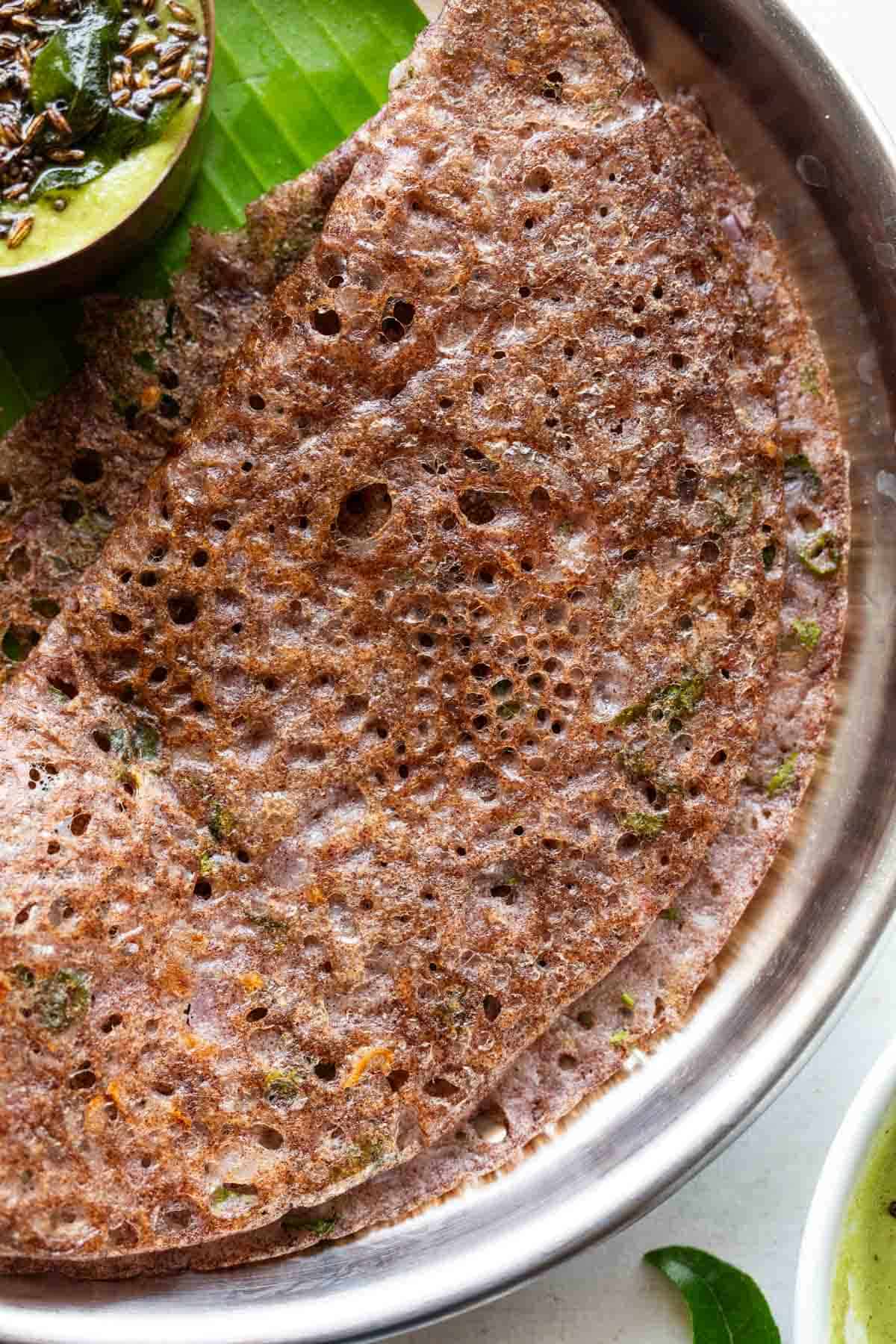
This dose is truly versatile. You can also add some grated carrots or thinly sliced cabbage to the dough. Another great addition is topping the dosa with grated paneer, or cracking an egg over it while cooking. Choose from my trio chutney recipe for a super delicious breakfast.
Watch Ragi Dosa Recipe Instant Video
Prevent your screen from going dark
Mixing the dough:
-
Add Ragi flour, rice flour, semolina and salt to a large mixing bowl. Add half the water and mix well to form a lump free dough. Add all the other ingredients and the remaining water to the bowl. The consistency of the dough should be like milk.
-
Leave the dough for 30 minutes.
Making the Dose:
-
Heat a non-stick tawa or a seasoned cast iron pan on medium heat.
-
Once hot, take a ladleful of batter and pour from a height of about 1-2 inches in a circular motion starting from the edge to the center. Do not try to spread the batter, always pour it around the pan.
-
As the batter hits the hot pan, you’ll see the dosa setting with tiny holes. These holes allow steam to escape and help make the dosa crispy. If there are any big holes, you can fill them with some dough. Reduce the heat to low, add ½ teaspoon of oil and cook for a few minutes or until golden.
-
Dosas take 4-5 minutes to cook on low heat. Turn the dosa over and cook for another minute or two.
-
Serve hot with coconut chutney or any other chutney of your choice.
- ABOUT Gluten free ragi dosaskip sooji rava or semolina. The dosas will taste good, but will be a little thinner.
- You can also add chopped vegetables like carrots, cabbage, beetroot etc in the dough if you want.
- The remaining dough can be refrigerated and will stay fresh for up to 3 days.
- You can use any The sin of laughingbut I personally like to use a non-stick Tawa as the dosa does not stick to the tawa and is easier to flip.
- Feel free to use oil or ghee to cook the dosa
- Mix the dough before each dose. This helps mix in any flour that has settled on the bottom
- Cook the dosas on low heat so that they are well cooked and crispy
- You may need to add a little more water to the batter in between, in case the batter becomes too thick. It should be consistency of milk.
- Unlike usual doses, the dough should not spread. it it must be poured and rolled in a hot pan. As it hits the pan, a lacy pattern will form. If you see any large unfilled pockets, drop some dough to fill them (watch the video to see how this is done).
Calories: 58kcal, Carbohydrates: 13g, Protein: 1g, Fat: 0.2g, Saturated fat: 0.1g, Polyunsaturated fat: 0.1g, Monounsaturated fats: 0.1g, Sodium: 100mg, Potassium: 51mg, Fiber: 1g, Sugar: 1g, Vitamin A: 34was, Vitamin C: 17mg, Calcium: 34mg, Iron: 0.4mg
This article was researched and written by Urvi Dalal.